What happened
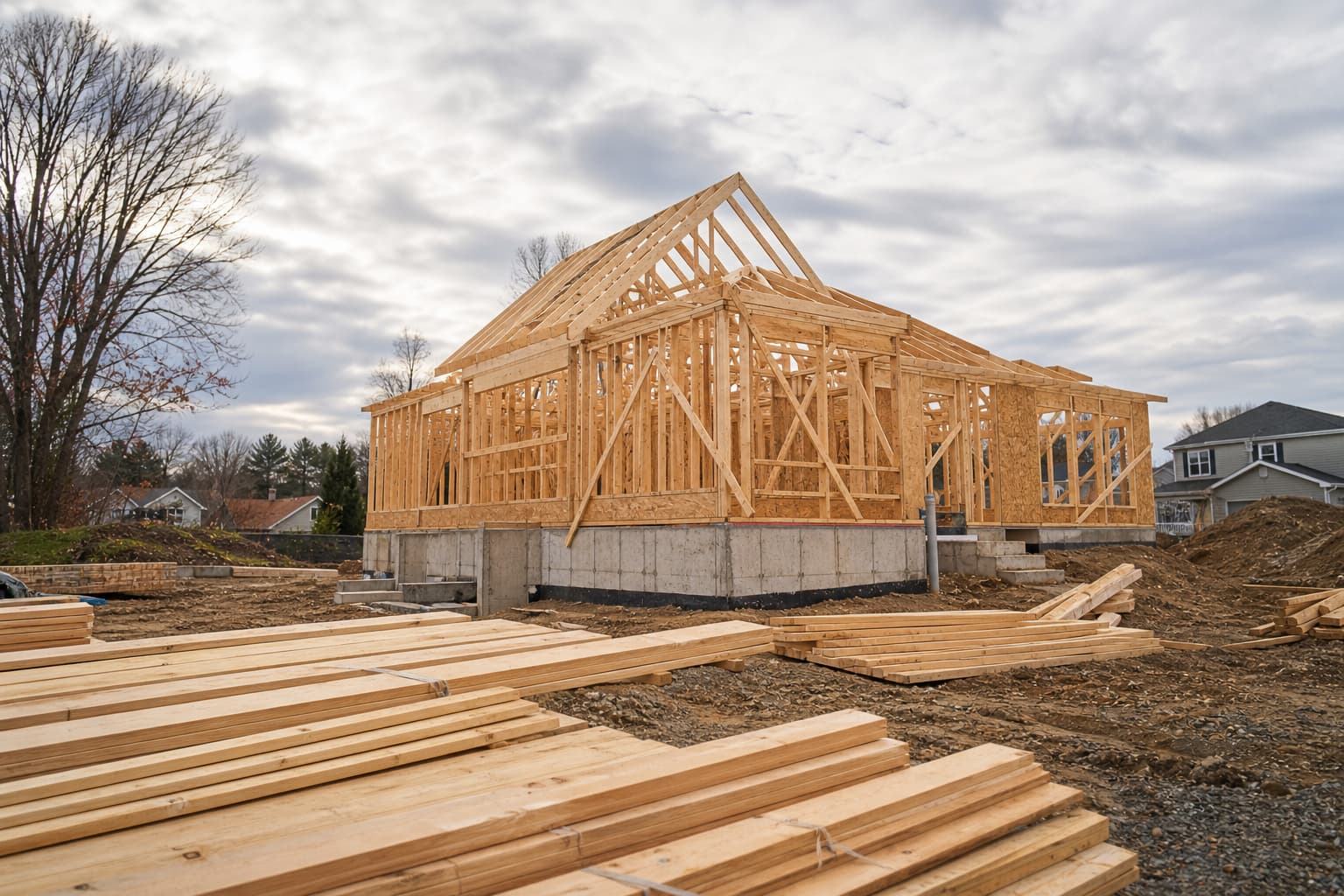
The latest U.S. construction report sent two different signals to the housing market. Housing starts — homes where construction has begun — rose to a seasonally adjusted annual rate of 1.309 million in October 2026, up 9.9% from September and 2.8% from a year earlier, according to Census Bureau and HUD data [1]. Single-family starts increased more modestly, rising 4.0% to an 864,000 annualized pace [1].
But the forward-looking side of the report was weaker. Building permits fell to a 1.295 million annualized pace, down 7.4% from September and 8.7% from October 2025 [1]. Single-family permits dropped 8.7% month over month, which matters because permits are often the first step in the future construction pipeline [1]. Realtor.com highlighted the same tension: starts improved, but permits “nosedived,” suggesting builders remain cautious about committing to new projects while affordability and demand are under pressure [2].
TD Economics framed the October rebound as helpful but not necessarily durable. Its economists noted that multifamily starts did much of the heavy lifting, while permitting weakness across both single-family and multifamily categories suggests the rebound could be short-lived [3].
Why borrowers should care
For homebuyers, new construction is not just a builder story — it is an inventory story. When more homes are started and completed, buyers can sometimes find more options, more predictable timelines, and, in certain communities, builder incentives. When permits fall, it may mean fewer new homes entering the pipeline several months from now.
That distinction is especially important in markets like Western New York. Buffalo-area buyers are often shopping in an older housing stock, where turnkey homes can draw competition and inspection issues can matter. New construction can help relieve pressure at the margin, but the Northeast remains a smaller construction region than the South and West. In October, Northeast total starts fell on a seasonally adjusted basis, even though single-family starts in the region improved [1]. That is a reminder not to overread one national headline into every local market.
Florida buyers face a different version of the same issue. The South remains the largest homebuilding region, and October starts increased there [1]. More construction can create more choices in parts of Florida where master-planned communities and builder subdivisions are active. But if permits continue to soften, today’s improved starts may not translate into a sustained wave of future inventory.
The rate backdrop still matters
Construction supply is only one side of the affordability equation. Mortgage rates remain a major constraint for borrowers and builders alike. Freddie Mac reported that the average 30-year fixed-rate mortgage was 7.28% as of November 19, 2026, up from 7.11% the prior week [4]. That does not mean every borrower receives that exact rate — pricing depends on credit profile, loan type, points, property, down payment, and market movement — but it shows why monthly-payment planning remains central.
Higher rates can cool demand, which is one reason builders may slow permitting even after a month when starts improve. Some builders may use incentives or price adjustments to keep sales moving, while others may delay projects until demand is clearer. For borrowers, this creates a mixed opportunity set: there may be negotiation room in some new-construction communities, but fewer permits could limit future choices if construction slows again.
What to watch next
The next key question is whether October was a one-month bounce or the start of a steadier supply improvement. Census notes that month-to-month construction estimates can be volatile and that it can take multiple months to establish an underlying trend [1]. For that reason, borrowers should watch permits, starts, completions, and mortgage rates together rather than focusing on one headline.
In practical terms, buyers should compare existing homes and new builds side by side. Ask whether a builder incentive lowers the rate, reduces closing costs, or simply shifts costs elsewhere. For resale homes, compare the purchase price against likely repair, insurance, tax, and maintenance costs. For new construction, pay close attention to completion timing, deposit terms, appraisal assumptions, and whether incentives require using a specific builder-affiliated provider.
What this means for borrowers right now
Borrower takeaway: October’s housing-starts rebound is welcome, but the permit decline means future supply is not guaranteed to improve in a straight line. Western New York buyers should stay ready for tight inventory in desirable neighborhoods, while Florida buyers may still find builder options but should scrutinize incentives and timelines. The best move is to get fully prequalified, compare loan scenarios before making an offer, and treat any builder concession or rate buydown as one part of the total cost — not a standalone reason to buy.